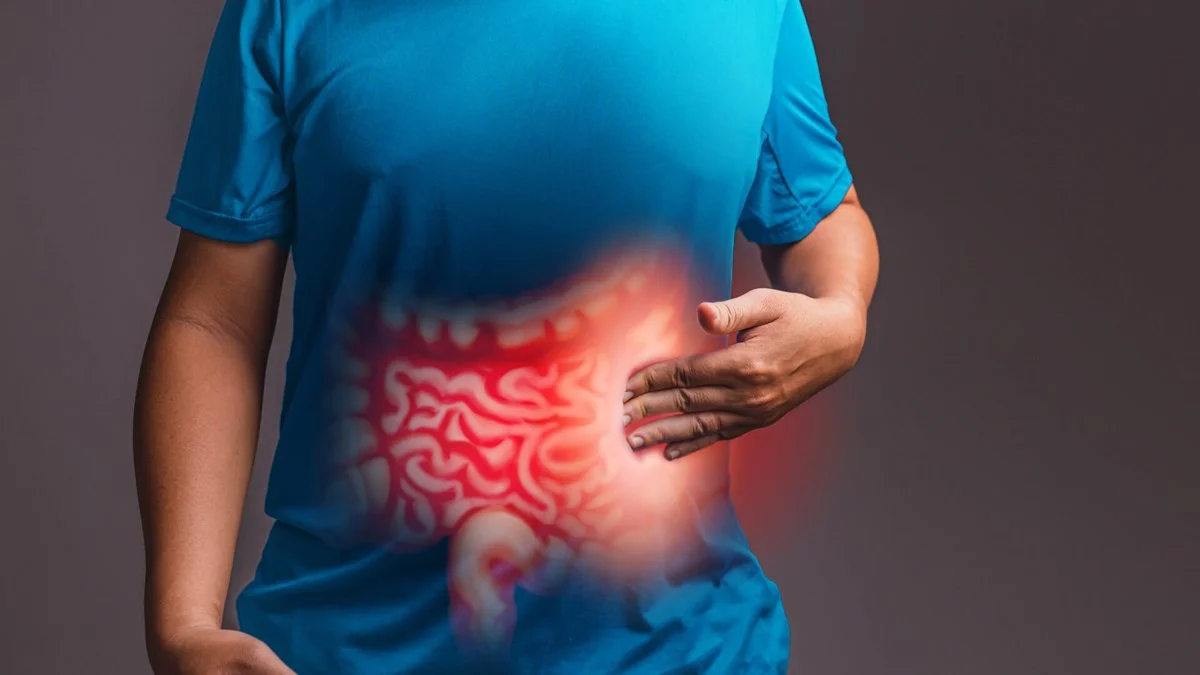
Chapman's Reflex Points: The Hidden Diagnostic Map on Your Body
Chapman's neurolymphatic reflex points are specific locations on the body that become tender when certain organs are stressed. They're a powerful diagnostic and treatment tool used in CMRT.
Imagine if your body came with a built-in diagnostic panel — specific locations on the skin and soft tissue that light up when an organ is under stress. Locations you could feel, palpate, and treat. That's essentially what Frank Chapman, DO discovered in the early twentieth century, and what practitioners of Chiropractic Manipulative Reflex Technique (CMRT) use every day in clinical practice.
Chapman's reflex points are one of the most elegant and underutilized diagnostic tools in natural healthcare. In this post I want to explain what they are, how I use them, and what it feels like when they're active.
Who Was Frank Chapman?
Dr. Frank Chapman was an osteopathic physician practicing in the early 1900s who noticed something unusual: certain small, tender nodules appeared predictably on the same spots of the body when specific organs were dysfunctional. He spent years mapping these points, correlating them with organ systems, and developing treatment protocols.
Chapman published his findings in the 1930s. His colleague Dr. Charles Owens later helped systematize and disseminate the work. Although Chapman was working in osteopathic medicine, his reflex point system was adopted by forward-thinking chiropractors — particularly those trained in SOT and CMRT — because of its profound clinical utility.
Today, Chapman's points are a cornerstone of CMRT assessment and treatment. Every CMRT evaluation I perform includes palpating the relevant Chapman's points for the organs most likely involved in a patient's symptom picture.
What Are Chapman's Points?
Chapman's points are small, discrete areas of tissue that become tender, boggy, or nodular when the organ they correspond to is under neurological or lymphatic stress. They're not acupuncture points, and they're not trigger points in the traditional sense. They represent areas of neurolymphatic congestion — places where the nerve-lymph relationship has become dysregulated.
The underlying mechanism involves the autonomic nervous system and its intimate relationship with lymphatic drainage. Each organ receives autonomic nerve supply from the spinal cord, and those nerve pathways create predictable reflex patterns on the body's surface. When an organ is stressed, the reflex pattern "activates" — producing tenderness and tissue changes at those specific locations.
This is a bidirectional relationship. Dysfunction in the organ creates tender Chapman's points. Treating those points, in turn, sends neurological feedback that helps normalize organ function.
Anterior vs. Posterior Points
Chapman's points come in pairs: an anterior point and a posterior point for every organ system.
Anterior points are located primarily on the front of the trunk — between the ribs, along the sternum, in the groin, and on the extremities. These are the primary treatment points: sustained, gentle pressure here initiates the reflex normalization.
Posterior points are located primarily along the spine and paraspinal soft tissues. These are primarily diagnostic — their tenderness confirms the involvement of a specific organ — but they can also be held simultaneously with the anterior point to amplify the therapeutic effect.
In practice, I will often find a posterior Chapman's point while palpating the spine for subluxations. A tender, nodular area in the paraspinal tissue at T5-T6, for example, immediately tells me the stomach reflex is active. I'll then go to the corresponding anterior point, confirm its tenderness, and address both as part of the treatment protocol.
Key Chapman's Points Worth Knowing
Here are some of the most clinically significant Chapman's point locations:
Liver and Gallbladder
The liver's anterior Chapman's point is found between the 5th and 6th ribs on the right side. The gallbladder point is just slightly inferior to that, between the 6th and 7th ribs on the right. When I press these areas and a patient winces — particularly if they've been dealing with right-side digestive symptoms, fatigue, or difficulty tolerating fats — these become primary treatment targets.
Stomach
The stomach's anterior points are located bilaterally between the 5th and 6th ribs, closer to the sternum than the liver points. The posterior points are at approximately T5-T6. Patients with chronic gastric issues, heartburn, or stress-driven digestive complaints almost always have these points active.
Ileocecal Valve
As I discussed in a previous post, the ileocecal valve's reflex point is in the right iliac fossa, near McBurney's point. This is one of the most commonly active Chapman's points I find in practice — and one whose activation explains a wide variety of confusing symptoms.
Adrenal Glands
The adrenal Chapman's points are just lateral to the vertebral bodies at T11-T12 posteriorly, and anteriorly at the lower lateral rib cage. In a society running on chronic stress, these points are frequently active. When I find them, I know we need to talk about the patient's stress load in addition to their structural complaints.
Kidney
The kidney points are posteriorly located at T12-L1, just lateral to the spinous processes, and anteriorly at the lateral aspects of the lower abdomen. Active kidney Chapman's points in a patient with lower back pain is an important clinical finding — it points to a viscero-somatic component that purely structural treatment won't fully resolve.
What Does an Active Chapman's Point Feel Like?
When a Chapman's point is active, it typically feels like a small, firm nodule or a boggy area of congested tissue — like a pea or a marble just beneath the skin. The overlying tissue may feel slightly thicker or less mobile than the surrounding area.
On the patient's side, pressing an active Chapman's point produces a distinctive tenderness — sharper and more focused than generalized soft tissue tenderness. Patients often say, "That's a weird spot to be sore" or "I never knew that was there." The tenderness is real and reproducible.
After treatment — which involves sustained, gentle rotatory pressure on the anterior point while holding the posterior point — the nodularity typically softens, the tenderness reduces, and the patient often reports feeling a release or a warmth in the area. This normalization of tissue quality is a reliable indicator that the reflex has been reset.
How I Use Chapman's Points in Practice
In my intake assessment, after reviewing a patient's history and performing a postural and spinal evaluation, I systematically palpate the Chapman's points most relevant to their complaint picture. If someone comes in with low back pain, I'll check the kidney, adrenal, and small intestine points. If they have upper respiratory issues, I'm palpating the lung, bronchi, and sinus points. If digestive symptoms are prominent, I'll check liver, gallbladder, stomach, and ICV points.
The Chapman's point findings often confirm what the spinal exam suggests — and occasionally they reveal organ involvement that the patient didn't mention because they didn't connect it to their chief complaint. This is one of the things I find most satisfying about CMRT-based care: it treats the person, not just the symptom.
Key Takeaways
- Chapman's reflex points are specific, palpable locations on the body that become tender when corresponding organs are under neurological or lymphatic stress.
- They come in anterior (treatment) and posterior (diagnostic/confirmatory) pairs for every major organ system.
- Clinically significant points include the liver, gallbladder, stomach, adrenals, kidneys, and ileocecal valve.
- Active points feel like small, firm nodules or boggy tissue. Treatment involves sustained, gentle pressure on the anterior point.
- CMRT-trained practitioners use Chapman's points as part of every intake assessment to identify visceral contributions to musculoskeletal complaints.
If you've been dealing with symptoms that feel disconnected — back pain plus fatigue, or hip pain plus digestive issues — Chapman's reflex point assessment may reveal the link that's been missing. Call Pura Vida Chiropractic at (210) 685-1994 to schedule your evaluation. We're located at 2318 NW Military Hwy #103 in San Antonio, and we offer care in both English and Spanish.