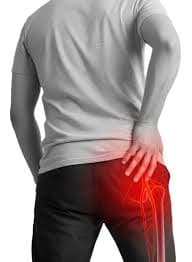
The Sacroiliac Joint: The One Joint Most Doctors Miss
The sacroiliac joint is involved in more pain conditions than most people realize — including shoulder pain, knee pain, and even TMJ. Here's why SOT is the best approach for a joint that most doctors miss entirely.
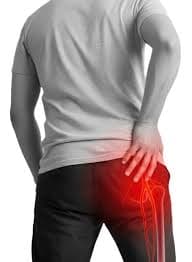
If you've been to multiple doctors for low back pain, hip pain, or sciatica and haven't found lasting relief, there's a joint that may not have gotten the attention it deserves. It doesn't show up well on most imaging. It gets confused for other conditions constantly. And the standard treatment approach for it — mobilizing a joint that's already too mobile — can actually make things worse.
The sacroiliac joint doesn't get much respect in conventional medicine. But in my practice, it's one of the most important structures I evaluate in almost every patient who walks through the door.
The Anatomy: What the SI Joint Actually Is
The sacroiliac joint is exactly what it sounds like — the joint formed where the sacrum (the triangular bone at the base of the spine) meets the ilium (the large blade of the pelvis) on each side. You have two SI joints, one on the left and one on the right.
These joints are held together primarily by ligaments — some of the strongest ligaments in the body. Unlike the vertebral joints above, which have a small range of motion in multiple directions, the SI joint is designed to move very little. Its job is primarily to transmit force between the spine and the legs, and to absorb shock during walking and running.
When the ligaments of the SI joint are working correctly, they provide a stable, slightly flexible connection that allows the pelvis to function as a unit. When those ligaments are stretched, strained, or — on the other end of the spectrum — when the joint locks up and loses normal motion, a cascade of problems follows.
Two Very Different Problems That Look Similar
This is where most treatment approaches go wrong: there are actually two opposite SI joint problems that present with very similar symptoms.
Hypomobility — the joint is locked, stuck, or restricted. In this case, the joint needs to be mobilized. Standard chiropractic and manual therapy techniques that work directly on the joint make sense here.
Hypermobility — the joint ligaments have been stretched and the joint is too loose. This is extremely common after pregnancy, after a fall on the tailbone, or after a cumulative history of straining that joint. In this case, the body is compensating for the instability by tensing the surrounding muscles — the piriformis, the glutes, the thoracolumbar fascia — to try to stabilize the pelvis artificially.
Here's the critical point: if you mobilize a hypermobile SI joint — if you apply the typical chiropractic or physical therapy technique that moves the joint — you make ligament laxity worse. The patient might feel temporary relief (because the muscle spasm eases briefly), but the underlying instability deepens. This is one of the most common reasons that SI joint and low back treatment fails to produce lasting results.
The SOT approach to the SI joint begins with determining which problem is present. That changes everything about the treatment.
How Far-Reaching SI Joint Problems Really Are
Most people think of SI joint problems as causing local pain — that dimple-of-the-back area, maybe some radiating pain into the buttock or down the leg. And yes, that's common. But the compensation patterns extend much further.
When the pelvis is unstable or asymmetric, the body compensates up and down the kinetic chain:
- Upward: The lumbar spine torques to accommodate pelvic asymmetry. The thoracic spine follows. One shoulder can sit higher than the other. The neck compensates, potentially contributing to chronic tension headaches and TMJ dysfunction.
- Downward: The femurs (thigh bones) rotate to accommodate pelvic tilt. One knee may track differently, leading to knee pain. The ankle and foot supinate or pronate differently on each side. Plantar fasciitis that "just won't resolve" sometimes has a pelvic origin.
I've had patients come in for knee pain and shoulder pain who had been through months of physical therapy with minimal improvement — and who made rapid progress once the SI joint was identified and addressed as the structural origin of the whole compensation pattern.
The SOT Approach: Stabilization Over Mobilization
Sacro Occipital Technique was developed specifically with the sacropelvic relationship at its core. The word "sacro" in SOT refers to the sacrum — and the first category of SOT care (Category I and II) addresses the SI joint before anything else.
For hypermobile SI joints, the SOT approach uses wedge-shaped blocks placed under the pelvis in specific positions. The patient lies down and the body's own weight, combined with gravity, creates gentle, sustained pressure that encourages ligament healing and pelvis rebalancing — without any high-velocity force. You're not mobilizing the joint further; you're supporting it in a corrected position and allowing the ligaments to begin healing.
For hypomobile joints, we use different block placements and specific sacral adjustment techniques that restore normal SI joint motion without destabilizing the ligamentous support.
The SOT Category II pattern — which involves SI joint hypermobility combined with disc involvement — also includes a trochanteric belt, worn around the hips, to provide external stabilization support during the healing period. Ligaments take 4-6 weeks to heal meaningfully, and the belt helps maintain pelvic stability between treatments during that window.
The Healing Timeline: What to Expect
Ligaments are notoriously slow to heal compared to muscles. They have a relatively limited blood supply, and healing timelines are measured in weeks to months rather than days.
For SI joint ligament involvement, patients should expect:
- Weeks 1-2: Noticeable reduction in acute pain, improvement in stability with daily activities
- Weeks 3-6: Continued ligament healing, reduction in muscle guarding as the body trusts the stability more
- Months 2-4: Return to full activity for most patients; lingering cases may require additional support
Throughout this time, treatment visits taper from more frequent to less frequent as the joint stabilizes. The goal is always to restore the body's own ability to maintain pelvic stability — not to create a dependency on ongoing treatment.
Who in San Antonio Should Know About This
Active adults, athletes, and anyone who spends long hours on their feet — our military families, our construction workers, our healthcare workers — are especially vulnerable to SI joint problems. Pregnancy stretches the SI ligaments hormonally, making the SI joint issue extremely common in women after childbirth, even months or years later.
If you've been told you have "sciatica," "piriformis syndrome," "hip bursitis," or a "low back strain" that keeps coming back despite treatment, it's worth having your SI joint evaluated specifically — and evaluated for whether the problem is too much motion or too little.
Key Takeaways
- The sacroiliac joint connects the sacrum to the ilium and is held together by strong ligaments
- SI joint problems can cause pain far beyond the low back, contributing to knee pain, shoulder asymmetry, TMJ issues, and more
- There are two opposite SI problems: hypomobility (locked) and hypermobility (loose) — and they require completely different treatment
- Mobilizing a hypermobile SI joint worsens instability — a common mistake in standard treatment
- SOT addresses SI joint dysfunction with block placements that use gravity to stabilize or mobilize as needed
- Ligament healing takes 4-6 weeks; trochanteric belt support helps during that window
- Athletes, post-partum women, and physically demanding workers in San Antonio are particularly vulnerable
If you've been cycling through treatments for low back, hip, or leg pain without lasting results, let's take a specific look at your sacroiliac joint. Call Pura Vida Chiropractic at (210) 685-1994 — we're at 2318 NW Military Hwy #103, San Antonio, TX 78231.