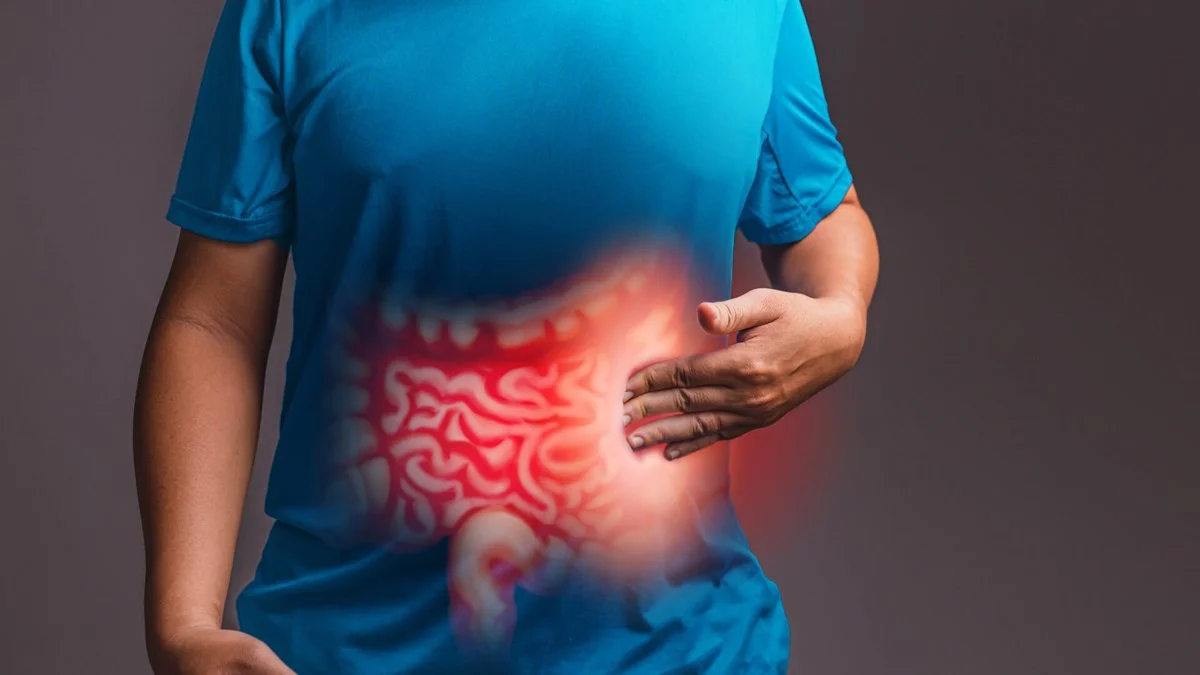
T5 and Your Stomach: The Spinal Root of Acid Reflux and GERD
Thoracic vertebra 5 has a direct nerve connection to your stomach. When T5 subluxates, digestive symptoms follow. Here's the spinal root of acid reflux that most gastroenterologists never consider.
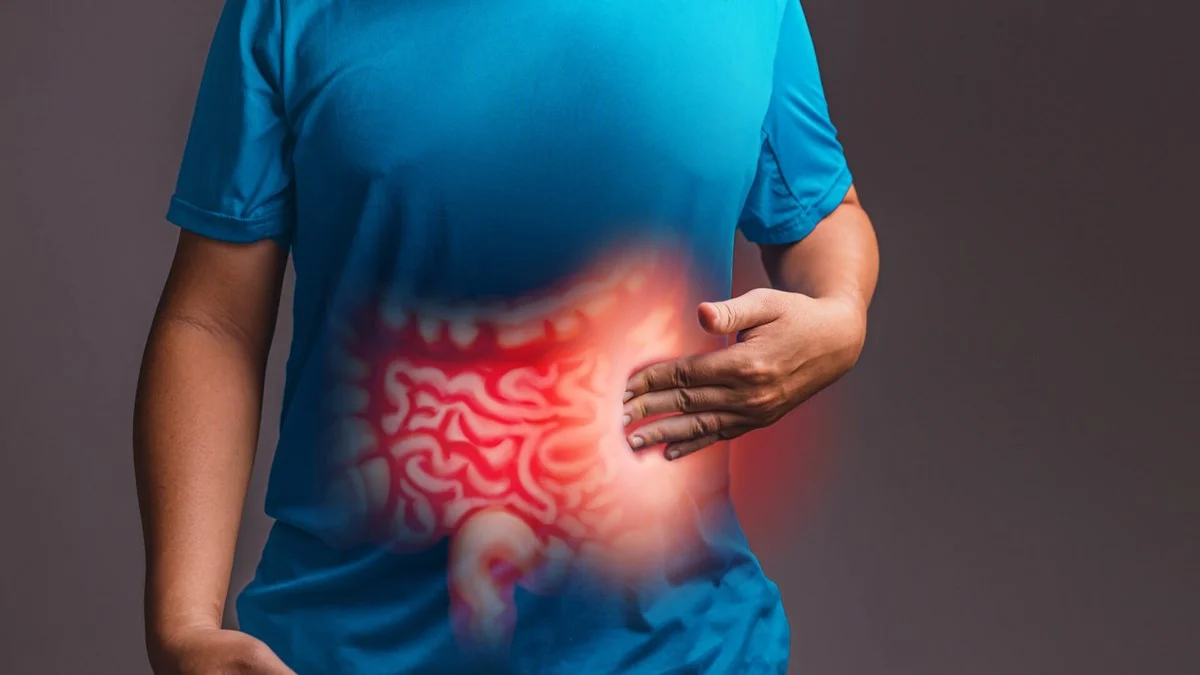
If you take a proton pump inhibitor (PPI) every morning before breakfast, you're in very good company. These medications — omeprazole, pantoprazole, esomeprazole — are among the most prescribed drugs in the United States. They suppress acid production and, for most people, they work well enough that the burning goes away.
But they don't explain why your stomach is overproducing acid. And for a significant subset of patients with chronic GERD, there's a contributing factor that has nothing to do with diet, stress, or Helicobacter pylori — and everything to do with a specific vertebra in the middle of your back.
T5: The Stomach's Vertebra
The 5th thoracic vertebra sits approximately at the level of the shoulder blades. At that level, autonomic nerve fibers branch off from the sympathetic chain and travel to the stomach — specifically, these fibers are part of the splanchnic nerve network that regulates gastric secretion, motility, and blood flow.
The balance between sympathetic and parasympathetic tone determines how the stomach functions. Parasympathetic input (primarily through the vagus nerve, which originates at the brainstem) stimulates gastric acid secretion, motility, and digestive enzyme production. Sympathetic input from T5 modulates and regulates this process.
When T5 subluxates — when it shifts in a way that creates nerve irritation — the balance of autonomic input to the stomach is disrupted. Sympathetic tone increases. Parasympathetic tone becomes dysregulated. The result can be:
- Abnormal gastric acid production
- Reduced gastric motility (slow emptying, which worsens reflux)
- Impaired function of the lower esophageal sphincter (LES), the valve that prevents stomach acid from flowing back into the esophagus
- Reduced mucosal protection of the stomach lining
None of this is separate from the other causes of GERD. Diet, obesity, hiatal hernia, H. pylori, medications — all of these can contribute. But the T5-stomach connection represents a neurological pathway that most gastroenterologists have never been trained to consider, and that can be a meaningful piece of the puzzle — especially in patients who have persistent symptoms despite appropriate medical management.
The Viscero-Somatic Feedback Loop
Here's where it gets particularly relevant for people who keep returning to the chiropractor for T5:
The nerve relationship runs in both directions. When the stomach is under chronic stress — years of acid overproduction, chronic inflammation, post-H. pylori changes, or ongoing dietary stress — it sends distress signals back up the nerve pathway to T5. These signals create chronic muscle tension and ligamentous strain around the T5 segment, which keeps pulling it back into subluxation.
This is why T5 can be one of the most frustrating segments for both patients and chiropractors. You adjust it, it clears, it comes back. You adjust it again. It comes back again. If the stomach is driving that cycle, the spine is never going to hold without addressing both ends of the loop.
Clinical Signs That T5 and Your Stomach Are Connected
In clinical evaluation, certain patterns suggest that a patient's T5 problem and their digestive symptoms are related rather than coincidental:
- Chronic tightness between the shoulder blades that doesn't fully resolve with massage or standard treatment
- Mid-back pain that correlates with meals — worsens after eating or when stomach symptoms flare
- Left shoulder blade referral pain combined with digestive symptoms (the left side is where stomach visceral pain most commonly refers)
- A history of GERD, frequent use of antacids, or long-term PPI use alongside recurring T5 complaints
- T5 that repeatedly subluxates without a clear mechanical cause (no injury, no specific physical strain)
These patterns alone don't confirm a T5-stomach connection — other things cause mid-back pain — but they raise the clinical index of suspicion significantly.
The CMRT Stomach Protocol
When I identify a T5-stomach pattern using these clinical indicators, I use the CMRT stomach protocol developed by Dr. M.B. DeJarnette. This involves several components:
Anterior stomach reflex points: Chapman's reflex points corresponding to the stomach are found on the anterior ribcage, roughly along the 5th and 6th intercostal spaces. These points become tender and show abnormal tissue texture when the stomach is under neurological stress. Working these points helps release the visceral component of the subluxation loop.
T5 adjustment: The vertebral correction is performed in conjunction with the reflex work — addressing both ends of the loop simultaneously rather than sequentially.
Posterior Chapman's points: There are corresponding posterior reflex points at the T5-T6 level that are also assessed and treated.
Reassessment: After the protocol, we reassess the tenderness of the reflex points. When the visceral component has been adequately addressed, the tenderness at the Chapman's points significantly reduces during the session.
What PPIs and Antacids Can and Can't Do
Proton pump inhibitors are effective medications and they have their place. For acute esophageal inflammation, erosive esophagitis, or H. pylori treatment, they can be genuinely important.
But they suppress acid production — they don't restore normal nervous system regulation of gastric function. They don't address the motility issue that contributes to reflux. They don't improve LES function. And they have well-documented long-term side effects with extended use: reduced magnesium and calcium absorption, altered gut microbiome, increased risk of C. difficile infection, potential vitamin B12 deficiency.
The point isn't that PPIs are bad. It's that they treat a symptom while leaving the underlying neurological disruption — if that's part of the picture — completely unaddressed. Many of my patients have been able to reduce their medication needs (in consultation with their prescribing physician) as their spinal and visceral function normalized through CMRT care.
A Pattern I See Regularly
I've worked with a number of patients over the years who came in primarily for mid-back pain and mentioned their GERD almost as an afterthought — "oh, and I've been on omeprazole for four years, but that's just something I take." In almost every case, T5 was among the most restricted segments in their spine, and the Chapman's anterior stomach points were exquisitely tender. After a course of CMRT care, the mid-back held its correction significantly longer, and more often than not, the patients mentioned unprompted that their stomach had been feeling better too.
I never promise outcomes. But when both the spinal and visceral signs are present, addressing both components consistently produces better results than addressing either one alone.
Key Takeaways
- T5 has a direct autonomic nerve connection to the stomach through the splanchnic nerve network
- T5 subluxation disrupts the sympathetic/parasympathetic balance, affecting gastric acid production, motility, and LES function
- A chronic viscero-somatic feedback loop means the stressed stomach keeps pulling T5 back into subluxation
- Clinical clues include mid-back tightness that correlates with meals, left shoulder blade referral, and long-term use of acid medications alongside recurring T5 complaints
- CMRT addresses both the T5 adjustment and the anterior/posterior stomach Chapman's reflex points simultaneously
- PPIs manage symptoms but don't restore neurological regulation of gastric function
- Many patients see improved spinal holding and reduced digestive symptoms when both components are treated together
If you have chronic acid reflux or GERD alongside mid-back pain that keeps returning, the T5-stomach connection may be worth evaluating. Call Pura Vida Chiropractic at (210) 685-1994. We're at 2318 NW Military Hwy #103, San Antonio, TX 78231.