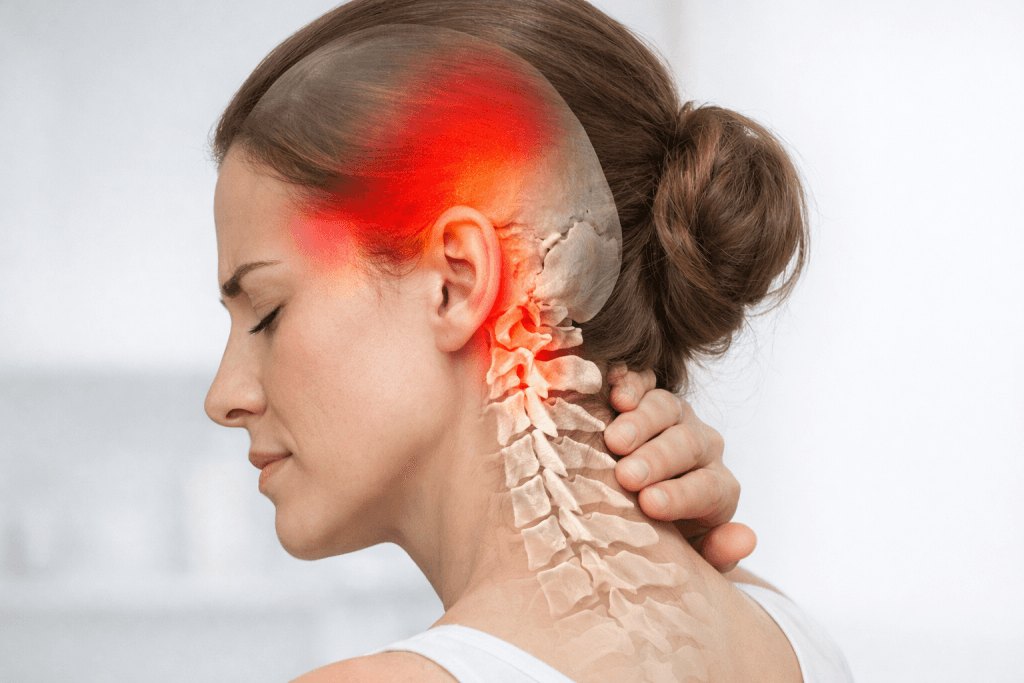
Why Your Adjustment Doesn't Hold — And What SOT Does About It
If you've ever had to return to the chiropractor week after week for the same problem without lasting improvement, there's a reason. The SOT approach addresses the structural, dural, and neurological reasons adjustments fail to hold.

This is probably the most common story I hear from new patients at Pura Vida Chiropractic.
"I've been going to a chiropractor for two years. I feel better right after the adjustment — sometimes great. But within a couple of days it's back. I go every week, but nothing is really changing."
This person is not imagining their improvement after adjustment. The adjustment is real. The correction is real. But it's not lasting, and that means something upstream of the adjustment is undoing it.
Finding that upstream cause — and addressing it — is what SOT is built to do. Let me walk through the five most common reasons adjustments fail to hold, and how a systematic SOT approach addresses each one.
Reason 1: A Viscero-Somatic Reflex Is Driving the Subluxation
The nervous system is a two-way street. Spinal dysfunction can affect organ function — but organ dysfunction can also drive spinal dysfunction, and this is a relationship that most chiropractic training barely touches on.
A viscero-somatic reflex occurs when an irritated or dysfunctional internal organ sends abnormal neurological signals to the spinal cord, which in turn creates facilitation (increased reactivity) in the corresponding spinal segments. The muscles around those segments tighten. The vertebrae pull toward the side of the facilitation. The adjustment corrects the position — but as long as the organ irritation continues, the neurological drive to misalignment remains. The bone moves back.
Common examples: chronic gallbladder dysfunction that keeps right mid-thoracic vertebrae pulling. Digestive inflammation that repeatedly drives T10-L1 into dysfunction. Uterine or bladder issues in women that drive sacral and lumbar patterns.
CMRT — Chiropractic Manipulative Reflex Technique, the SOT approach to viscero-somatic work — addresses this by treating the reflex arc at the organ level. Specific reflex points on the abdomen and spine are stimulated in a precise sequence that normalizes the neurological signaling from the affected organ. When the visceral reflex is cleared, the spinal pattern loses its neurological driver. The adjustment holds.
Reason 2: Dural Tension Is Pulling the Bones Back
I've written a full post about dural tension, but the short version for this context is this: the dura mater is a continuous fibrous tube running from the base of the skull to the sacrum. It has firm attachments at C2, C3, and the sacrum.
When the dural tube is under tension — from birth trauma, head injury, accumulated postural stress, or SI ligament injury — it exerts a constant pulling force on its attachment points. Adjust C2 and it will come back, because the dural tube is pulling it. Adjust the sacrum and it will drift back, because the tension hasn't been released.
The solution is to address the dural tube directly: block treatment to normalize sacral position and release inferior dural tension, cranial work to address the superior end, and the two performed in the same session so the tube is treated as the single continuous structure it actually is.
Patients with dural tension as the driver of their non-holding adjustments frequently have a characteristic history: they've been adjusted by multiple practitioners with temporary success only. They often feel worse after aggressive manipulation because the force adds to the dural stress. When the dural component is finally addressed, they are sometimes amazed that the improvement they've been chasing for years simply holds.
Reason 3: Cranial Bone Restriction Is the Missing Piece
Most chiropractors adjust the spine. Far fewer assess and treat the cranial bones. But the cranium and spine are connected — through the dural tube, through the neurological output of the brainstem, and through the cervical chain that runs between the occiput and the upper cervical vertebrae.
When a cranial bone is restricted — the occiput, the temporal bones, the sphenoid — it alters the mechanics of the entire cervical spine. The atlas (C1) normalizes relative to whatever the occiput is doing. If the occiput is torqued, C1 is torqued. Adjust C1 as many times as you like — it will keep returning to compensate for the occiput above it.
The pattern I see most commonly is atlas instability driven by an occipital restriction that was created by birth trauma or by an old head injury. The patient has been adjusted at C1 repeatedly, often by skilled practitioners, and the results have been temporary because the cranial bone above has never been addressed.
Cranial work in these cases is the key that unlocks lasting cervical correction. Once the occiput is mobile and balanced, C1 has somewhere appropriate to sit — and it typically stays there.
Reason 4: Category II SI Ligament Instability
As I described in detail in the post on SOT categories, Category II describes a situation where the SI ligaments have been sprained and the joint they stabilize is mechanically unstable. In this state, every adjustment to the lumbar spine or pelvis is being made into an unstable foundation.
It's like trying to build a straight wall on a foundation that keeps shifting. You can plumb the wall perfectly today — and it will be crooked again tomorrow because the foundation moved.
Category II requires a different approach than standard manipulation. It requires the gentle, sustained block work that allows the SI ligamentous complex to rest, heal, and regain tension — without the forceful loading that standard manipulation delivers. Concurrent cranial work addresses the dural tension that always accompanies Category II. Over time, as the ligaments heal and the joint stabilizes, the adjustments above it begin to hold.
The timeline for Category II is longer than for a straightforward mechanical problem — often three to six months for full stabilization of the ligamentous complex. But the trajectory is consistently forward, and most patients notice meaningful functional improvement long before the ligaments are fully healed.
Reason 5: The Primary Lesion Was Never Identified
This one is perhaps the most fundamental. Every spine has a primary lesion — the original, foundational structural problem from which compensatory patterns radiate outward. If you treat the compensation rather than the primary lesion, you can adjust indefinitely and the primary lesion will keep driving the compensatory pattern back into place.
Finding the primary lesion requires a systematic, hierarchical assessment. In SOT, that assessment always starts at the foundation — the pelvis — because the foundation drives everything above it. The category is determined first. The sacropelvic pattern is identified and treated first. Then the spine is assessed from the corrected foundation. Then the cranium.
When care proceeds in this order — pelvis first, spine second, cranium third — the adjustments at each level are made into a stable, corrected base. They hold because the structure below them is no longer pulling them back.
When care proceeds without this hierarchy — treating wherever it hurts, in whatever order — temporary relief is the best outcome. The primary lesion keeps asserting itself.
The SOT Pyramid: Foundation-Up
This foundation-up approach is what I call the SOT Pyramid. At the base: the pelvis and sacrum. In the middle: the spinal column. At the top: the cranium. Treatment proceeds from the base upward, and assessment at each level informs what treatment is needed at the level above.
In practice, this means my assessment at the beginning of each visit includes the pelvis before it includes the cervical spine. It means I don't begin adjusting the atlas until I've addressed what the occiput is doing. It means I don't rush.
The Pura Vida Protocol
What I've developed over twenty-three years of practice is an integrated approach that I think of as the Pura Vida Protocol: SOT category diagnosis and block treatment form the structural foundation. CMRT addresses the viscero-somatic component. Cranial adjusting addresses the superior end of the dural tube and the specific cranial bone patterns that keep the cervical spine from holding. Adjunctive therapies — cold laser for tissue healing, decompression for disc involvement, soft tissue work for fascial restriction — are added where the clinical picture calls for them.
No single technique does all of this. But together, they address every major reason an adjustment might fail to hold — which is why the patients who've tried everything else often find their turning point here.
What Patients Notice When the Right Approach Is Used
The feedback I hear most often from patients who have found their way to the right protocol after a long search is some version of: "I didn't realize how different this was going to feel until the adjustment actually held."
One session without full correction doesn't tell you much. But three sessions in a row where you come back and the correction from last time is still there — where you're building stability instead of resetting — that tells you something important. The body is finally responding. The root cause is finally being addressed.
Key Takeaways
- Adjustments that don't hold are not a sign that chiropractic doesn't work. They are a sign that the driver of the problem hasn't been identified and treated.
- The five main reasons adjustments fail to hold: viscero-somatic reflexes, dural tension, cranial bone restriction, Category II SI ligament instability, and failure to identify the primary lesion.
- The SOT pyramid — pelvis first, spine second, cranium third — ensures treatment proceeds from the foundation upward, so each correction is made into a stable base.
- CMRT addresses the visceral component. Blocks address the ligamentous and dural component. Cranial work addresses the superior dural attachment and cervical stability.
- The Pura Vida Protocol integrates SOT, CMRT, cranial adjusting, and adjunctive therapies to address every layer of why problems persist.
If you've been stuck in the temporary-relief cycle, I'd love to do a thorough evaluation and find out what's really driving your problem. Call Pura Vida Chiropractic at (210) 685-1994 and schedule with Dr. Dan Foss. Serving San Antonio in English and Spanish — because everyone deserves care that actually holds.