Why Your Low Back Pain and Your Jaw Problem Might Be the Same Problem
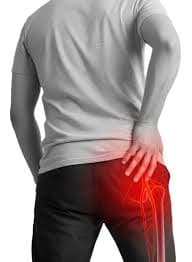
The innominate (hip) bone has a direct anatomical relationship with the temporal bone of the skull — which means low back pain and TMJ problems are often two expressions of the same underlying issue.

What if the reason your jaw keeps clicking might be living in your pelvis?
I know that sounds strange. The jaw and the pelvis seem about as anatomically unrelated as two structures can be. They are at opposite ends of the body. They are treated by entirely different specialists — orthopedists for the back, dentists or oral surgeons for the jaw. Nobody thinks to connect them.
And yet, in over two decades of clinical practice using Sacro Occipital Technique, I have seen this connection play out hundreds of times. The patient with chronic SI joint instability who also grinds their teeth. The patient whose jaw clicking started around the same time their back went out after that minor car accident. The patient who got a new dental splint and, a month later, their low back started acting up for the first time.
These are not coincidences. They are anatomy.
Two Parts of the Body Nobody Thinks to Connect
Let's orient to the anatomy before we get to the connection.
The innominate bone is the large, blade-shaped bone that forms your hip — technically the ilium, ischium, and pubis fused together. The two innominate bones join the sacrum (the triangular bone at the base of your spine) at the sacroiliac joints, forming the pelvis. These are major weight-bearing joints with complex ligamentous support, and they are among the most commonly injured and chronically dysfunctional structures in the human body.
The temporal bone is one of the 22 bones of the skull. It forms the side of the head, houses the inner ear and ear canal, and — critically — forms the socket of the temporomandibular joint (TMJ), the hinge where your jaw opens and closes. The temporal bone articulates with the occiput (back of the skull), the sphenoid (central base of the skull), and the parietal bone above.
On paper, these two bones are separated by the entire length of the spine, the ribcage, and the neck. What on earth connects them?
The Anatomical Connection SOT Discovered
The connection runs through the dural tube.
The dura mater is the tough, fibrous outer membrane that surrounds your brain and spinal cord. It extends from the skull — attaching firmly to the occiput, C1, C2, and C3 — all the way down to the sacrum and coccyx at the bottom. It is a continuous, tensioned structure. When one end is distorted, tension travels through the entire length to the other end. Think of it like a rope stretched between two fixed points: pull one end, and you move the other.
Dr. M.B. DeJarnette, who spent 60 years developing Sacro Occipital Technique, mapped the precise clinical relationship between the innominate bone and the temporal bone. What he found was this: specific patterns of sacroiliac dysfunction — what SOT categorizes as Category II — create characteristic dural tension patterns that travel up the spine and express themselves at the cranial base, particularly at the occiput and temporal bones.
Here is the cascade: The sacroiliac ligaments become stressed (Category II). The sacrum shifts. Tension builds in the dural tube. The occiput at the base of the skull is pulled toward the stressed side. The occiput affects its neighboring bone — the temporal. The temporal bone shifts subtly, changing the geometry of the jaw joint it houses. The jaw, now working from an uneven foundation, begins to compensate. Clicking, grinding, uneven bite force, one-sided headaches, and ear fullness follow.
The jaw problem is real. The jaw symptoms are real. But the jaw is not the primary driver — the pelvis is.
The Clinical Picture — What This Looks Like in Real Patients
I have a clear image in my mind of this patient type because I see them regularly.
They have had chronic low back or SI pain for years — sometimes since a pregnancy, sometimes since a fall or car accident, sometimes it just gradually appeared. They manage it with occasional chiropractic, stretching, or anti-inflammatories. Separately — often filed away in a completely different mental compartment — they have TMJ issues: jaw clicking, clenching at night, periodic jaw soreness, or a dentist who keeps mentioning their bite. They may also have recurrent headaches on one side, a sense of fullness in one ear, or occasional dizziness.
They have seen an orthopedic surgeon for the back. They have seen their dentist or an oral surgeon for the jaw. Neither provider asked about the other complaint, because in conventional medicine, these are completely separate structural problems managed by different specialties. Neither ever said: "These might be connected."
When they get to my office and I explain the innominate-temporal relationship, the response is almost always the same. They sit quietly for a moment. Then: "That actually makes sense."
The Reverse Is Also True
This relationship is bidirectional, and understanding the reverse direction has important implications for anyone who has had significant dental work.
If the temporal bone is shifted by a dental appliance, orthodontic work, or even a poorly fitted crown that changes the bite — and that shift is not corrected — it can transmit through the dural tube in the opposite direction. The occipital position shifts. The dural tube tightens. The sacrum, pulled by the tension above, begins to compensate. The sacroiliac joint destabilizes.
I have seen patients develop significant low back problems within weeks of major dental procedures. They assume they slept wrong, or lifted something, or that it is unrelated to the dental work. In some cases it genuinely is unrelated. But in others, the timing is not a coincidence — the change to the temporal bone environment altered the dural tension throughout the entire spine, and the SI joint was the weakest link.
This is not an argument against dental care. It is an argument for awareness — and for having a chiropractor who understands this relationship in your healthcare circle.
Other Surprising Connections in the Same Chain
Once you understand the dural tube as the connecting structure, a few other clinical patterns start to make sense.
Temporal bone → Eustachian tube → Ear infections in children. The Eustachian tube runs through and near the temporal bone. When the temporal bone is restricted — as it commonly is following a difficult birth — the Eustachian tube drainage angle is slightly altered. Fluid accumulates. Bacteria grow. Ear infections recur. This is one of the reasons pediatric cranial SOT work produces such consistent results with children who have chronic ear infections. Correcting the temporal bone changes the mechanical environment of the Eustachian tube.
Temporal bone → Cranial nerve VIII → Vertigo. The vestibulocochlear nerve (CN VIII), which governs both hearing and balance, passes through a canal in the temporal bone. Restriction of the temporal bone can mechanically compress or irritate this nerve, producing the dizziness, motion sensitivity, and spatial disorientation associated with benign paroxysmal positional vertigo and other vestibular conditions.
Innominate → Psoas → Forward head posture. The psoas muscle attaches to the lumbar vertebrae and the femur, but its tone and tension are closely linked to the sacroiliac position. Chronic psoas tightness from a posteriorly rotated ilium (a common Category II pattern) creates a chain of anterior tension that, through the fascial system, pulls the thoracic spine into kyphosis and the head forward. Forward head posture then loads the cranial base differently — and we are back to temporal bone and jaw mechanics.
These are not isolated curiosities. They are the same system, viewed from different angles.
What SOT Does About It
The SOT approach to this problem is to address both ends of the relationship in the same session.
When the Category II pattern is present — the sacroiliac instability with dural involvement — specific pelvic blocks are placed under the pelvis according to the patient's precise pattern. The patient lies quietly while gravity and body weight create the correction. This is not a high-velocity thrust — it is a sustained, gentle repositioning that allows the dural tension to gradually release.
At the same time, cranial work is performed to address the temporal bone directly. Using fingertip-level pressure on the cranial bones, the restricted temporal is gently mobilized, restoring its normal rhythmic motion and decompressing the jaw joint foundation above it.
When both ends of the problem are addressed together, the results are lasting in a way that treating either end alone cannot achieve. Patients who have cycled through rounds of chiropractic for the back and dental splints for the jaw — with partial relief from each but no resolution — frequently turn a corner when the connection between the two is identified and treated as a unified problem.
Have You Been Treating Half the Problem?
I want to be clear: the orthopedist who treated your SI joint was doing their job. The dentist who made your splint was doing their job. Working within their respective disciplines, they did what they were trained to do. The issue is not that anyone did anything wrong — it is that the full picture requires a framework that crosses those disciplinary lines.
SOT provides that framework. DeJarnette spent 60 years mapping relationships like the innominate-temporal connection precisely because he was unwilling to accept that the body was a collection of separate parts. It is not. It is one continuous system, and when one part of that system is under chronic stress, the effects travel to places that seem completely unrelated — until you have the map.
If you have been managing low back pain and jaw problems separately, and neither has fully resolved, it may be worth finding out whether they share a common source.
Key Takeaways
- The innominate (hip) bone has a direct anatomical relationship with the temporal bone of the skull through the dural tube — a continuous membrane running from sacrum to skull.
- Category II SOT dysfunction creates dural tension that travels from the pelvis through the full length of the spine to the cranial base, shifting the temporal bone and destabilizing the jaw joint foundation.
- The reverse is also true: dental procedures that shift the temporal bone can transmit tension through the dural tube and destabilize the sacroiliac joint.
- Other related connections include temporal bone restriction and chronic ear infections in children, temporal-CN VIII compression and vertigo, and innominate rotation, psoas tightness, and forward head posture.
- SOT addresses both the pelvic and cranial ends of this relationship in the same session, producing lasting results that treating either end alone cannot achieve.
- Dr. Dan Foss is the only Advanced SOT-certified chiropractor in San Antonio — trained in both the Category system and SOT Craniopathy.
If this sounds like your situation — chronic low back or SI pain, jaw symptoms, or both — let's take a look at the full picture. Call Pura Vida Chiropractic at (210) 685-1994. We are at 2318 NW Military Hwy #103, San Antonio, TX 78231, and we are happy to talk through what you have been experiencing before you even make an appointment.