SOT Category I, II, and III: What Your Chiropractor Means and Why It Matters
When your SOT chiropractor says you're a Category II, what does that actually mean? Understanding the three SOT categories helps you understand your own body and why your treatment looks the way it does.

One of the things I've found over twenty-three years of practice is that patients do better when they understand what's happening in their own bodies. Not just that something is wrong, but why, and what the plan is to address it. Informed patients are more engaged patients — and more engaged patients get better faster.
So if I've told you that you're a Category II, or if you're new to SOT care and want to understand what the categories mean before your first visit, this post is for you.
The SOT Category System: Built From the Ground Up
Sacro Occipital Technique approaches spinal health from the foundation upward. DeJarnette recognized that the pelvis — specifically the sacrum and the sacroiliac (SI) joints — is the structural base upon which the entire spine is built. When the foundation is off, everything above it compensates. When the foundation is corrected, the spine above often organizes itself far more readily.
The three SOT categories describe three distinct levels of sacropelvic involvement, each with its own characteristic symptoms, physical findings, and treatment approach. They are not a ranking from mild to severe in the way you might think of a sprain being Grade I, II, or III. They are qualitatively different problems — different structures involved, different mechanisms, different treatment.
It's also important to know that categories can coexist (a patient can show characteristics of both Category I and II), and categories change as healing progresses. Moving from Category III to Category II to Category I is the normal arc of recovery from a significant sacropelvic injury.
Category I: The Foundational Imbalance
Category I describes a basic sacroiliac joint imbalance — one ilium is slightly anterior or superior relative to the other, creating an asymmetric foundation for the spine above. The SI ligaments are intact and not under significant stress. The dural tube is not involved. The presentation is structural, not inflammatory or ligamentous.
Symptoms in Category I tend to be unilateral and mechanical: one-sided low back stiffness or aching that responds to movement, predictable discomfort with sustained postures (long sitting or standing), and a general sense of being "off" structurally. Symptoms are often position-dependent and relatively straightforward in their behavior — better with this, worse with that.
Physical findings include a leg length inequality that is consistent in the prone position, specific muscle tension patterns in the lumbar erectors, and a pelvic landmark asymmetry that is visible and palpable. The arm fossa test — a key SOT diagnostic — will be negative for Category II findings.
Block placement in Category I is designed to balance the two iliac bones relative to each other and normalize the SI joint on both sides. The blocks are positioned to allow gravity to gently correct the rotational or positional imbalance in the pelvis. Most Category I patients respond quickly — often within two to four sessions — because the underlying structure (intact ligaments, no dural involvement) simply needs to be repositioned and allowed to stabilize.
Category I is the maintenance state. If you've been through active care for a more significant problem and are now in a wellness or maintenance program, you're likely presenting as Category I when you come in for periodic check-ups.
Category II: Ligament Sprain and Dural Tension
Category II is the most common presentation I see in patients with significant, persistent low back pain — and it is also the most frequently mismanaged in standard chiropractic and physical therapy care.
Category II describes sprain of the SI ligaments — the powerful ligamentous complex that stabilizes the sacrum between the two iliac bones. This is a soft tissue injury, similar in nature to an ankle sprain, and it carries many of the same implications: the injured ligaments are lax, unstable, and sensitized; the joint they stabilize is now partially uncontrolled; and the body compensates by recruiting surrounding muscles into guarding patterns that eventually become painful in their own right.
The dural tube attaches firmly to the sacrum. When the SI ligaments are sprained and the sacrum loses its normal positional control, the dural tube is placed under tension. That tension transmits upward through the entire spine, which is why Category II patients frequently have symptoms that seem to be in the lumbar spine, the mid-back, or even the neck — when the actual driver is the ligamentous problem in the pelvis.
Symptoms in Category II are often more diffuse and bilateral than Category I. Patients may describe a deep, aching quality to their low back pain that doesn't clearly improve with any position. They may have bilateral leg symptoms. They often feel worse after activities that load the SI ligaments (running, prolonged standing on hard floors, carrying weight asymmetrically). Crucially, they may also feel worse after standard spinal manipulation — because forceful loading of a sprained ligamentous complex is exactly the wrong intervention.
Physical findings include the positive arm fossa test — a specific orthopedic test where pressure to specific points on the lumbar spine, with the patient in a specific position, produces a characteristic response indicating ligamentous involvement. The leg length inequality in Category II often changes between different positions (prone vs. supine), unlike the more consistent pattern of Category I.
Block placement in Category II is more specific than in Category I and must be done carefully. The goal is to create a gentle decompressive force on the SI ligamentous complex — not to load it further. The sacral block position is adjusted to allow the ligaments to rest in a slackened position while the connective tissue begins to heal. Cranial work is almost always performed concurrently because of the dural tube involvement.
One of the most important things I tell Category II patients is this: if you've been getting forceful SI joint manipulation and it relieves you briefly but you're back to pain within a day or two and you keep returning to the same baseline, it may be because the manipulation is temporarily moving the joint but also re-stressing the ligaments that need rest to heal. Category II requires a different approach — and blocks provide it.
Category III: Disc Involvement
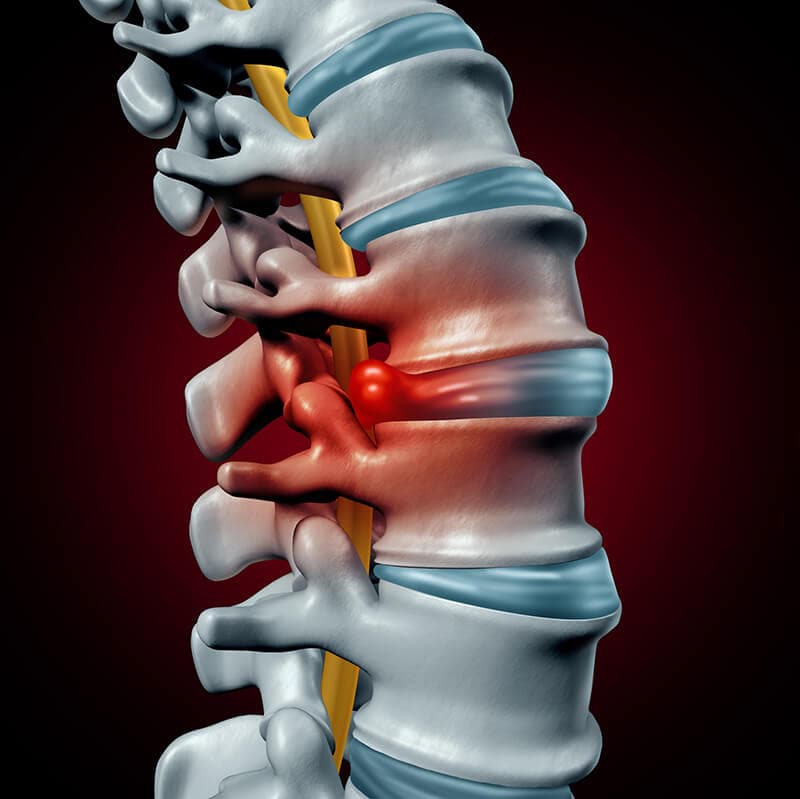
Category III describes the picture when a lumbar intervertebral disc has become involved — either through pressure, prolapse, or herniation. Discs are the shock-absorbing fibrocartilage pads between the lumbar vertebrae, and they become vulnerable when foundational SI imbalance alters the loading distribution through the lumbar spine over time.
A disc problem doesn't usually begin with the disc. It begins with a Category I or II sacropelvic problem that was never fully corrected, and the disc gradually accumulates damage under altered mechanical loading until it gives way. This is why addressing the foundation is so important — it's prevention of Category III in a patient who is currently Category I or II.
Symptoms in Category III include the classic disc presentation: low back pain that radiates into the buttock and down the leg along a dermatomal pattern (sciatica), neurological symptoms such as numbness, tingling, or weakness in a lower extremity, pain that is worse with sitting and bending forward, and often an antalgic lean to one side. The patient may have significant difficulty changing positions.
Physical findings include a positive straight leg raise, dermatomal sensory changes, and specific block test findings that distinguish Category III from II. The leg length presentation and orthopedic test results guide the specific protocol.
Block placement in Category III is the most precise and is always bilateral, with specific protocols designed to open the intervertebral foramina on the affected side while taking pressure off the disc from below. In our clinic, Category III care is frequently combined with cold laser therapy for disc tissue healing, and in appropriate cases, with spinal decompression therapy for additional traction-based disc relief.
Category III requires the most time to resolve and benefits from the most integrated approach — blocks, specific lumbar work, cranial correction, and adjunctive therapies working together.
How Categories Change as Healing Progresses
Here is something that I find genuinely encouraging to explain to patients who are in Category III: this is the starting point, not the permanent condition.
As care progresses, the disc decompresses, the ligaments stabilize, and the pelvis regains its mechanical integrity. The category improves. A patient who comes in as Category III typically moves into Category II after several weeks of care as the acute disc involvement reduces, then into Category I as the ligaments stabilize, and ultimately out of active care altogether as the pelvis holds its correction independently.
Monitoring the category at each visit allows me to adjust the treatment in real time — I'm not following a static protocol but responding to where the body is in its healing process. This is one of the things that makes SOT particularly elegant as a system: it is dynamic, individualized, and responsive.
Key Takeaways
- SOT Category I describes basic SI joint imbalance with intact ligaments. It responds quickly to block treatment and is the maintenance state.
- Category II involves SI ligament sprain and dural tube tension. Forceful manipulation often aggravates it. Blocks and cranial correction are the appropriate approach.
- Category III involves disc involvement — typically the result of long-standing foundational imbalance. It requires the most comprehensive care and integration of adjunctive therapies.
- Categories are not fixed. Healing progresses from III to II to I as the structural and ligamentous problems resolve.
- The category system allows treatment to be precisely matched to the patient's current state, not a one-size-fits-all protocol.
If you've been in pain without a clear diagnosis, or if you've had a disc problem that hasn't responded to standard care, understanding your category may be the key. Call Pura Vida Chiropractic at (210) 685-1994 to schedule a comprehensive SOT evaluation with Dr. Dan Foss. We serve San Antonio in English and Spanish.