Backpack Safety and Your Child's Spine: What San Antonio Parents Need to Know
Heavy backpacks are quietly damaging San Antonio children's spines every school year. Dr. Dan Foss explains the warning signs, the weight limits that actually matter, and how to protect your child's back.

Every fall across San Antonio, millions of students load up backpacks stuffed with textbooks, binders, laptops, water bottles, and sports gear — and carry that load for six to eight hours a day, five days a week, for nine months out of the year.
Most parents give this almost no thought. Backpacks are just part of childhood. Kids have been carrying them forever.
What's changed is how heavy they've gotten — and how much research we now have on what sustained backpack loading actually does to developing spines.
How Heavy Is Too Heavy?
The American Chiropractic Association and the American Academy of Pediatrics both recommend that a child's loaded backpack not exceed 10% of their body weight. Research supports this guideline: loads above 10-15% of body weight produce measurable changes in spinal alignment and gait, increase lumbar muscle activation significantly, and — with sustained daily exposure — contribute to structural changes in the developing spine.
Now do the math for your child. A 60-pound first-grader carrying a 12-pound backpack is already at the upper limit. A 90-pound fifth-grader carrying 18 pounds of textbooks is well over it. High school students — carrying heavy AP textbook loads, sports equipment, and laptops — routinely carry 20-25% of their body weight.
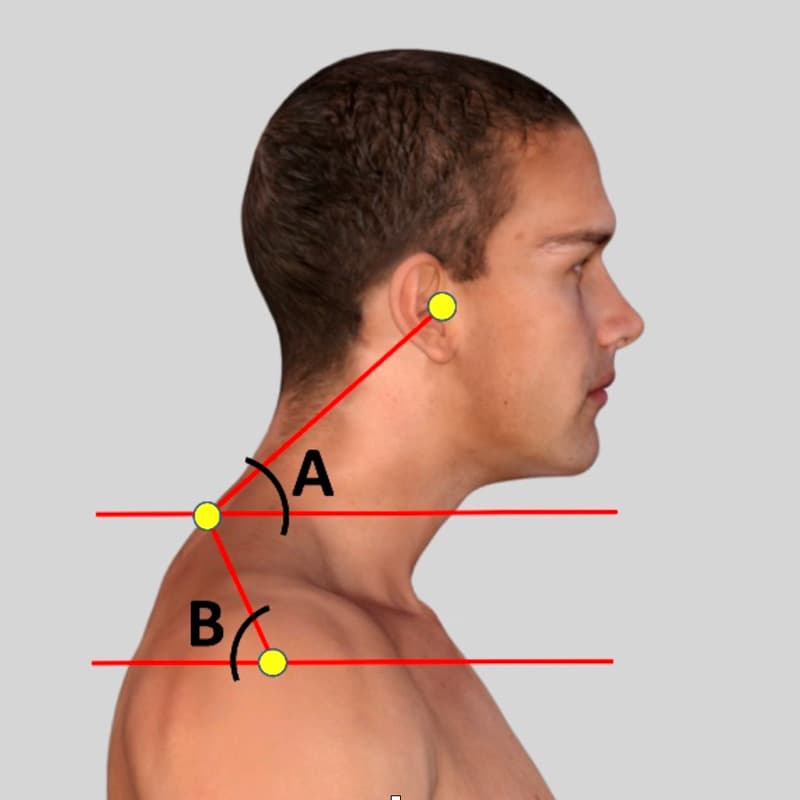
Many of the middle and high school students I see in my San Antonio practice are already presenting with reduced lumbar lordosis, forward head posture, and chronic upper back tension — at 13 and 14 years old — that correlates directly with their backpack loading history.
What Heavy Backpack Loading Does to the Spine
The spine responds to load predictably. When you carry weight on your back, the lumbar spine flexes forward to compensate, the shoulders round, and the head migrates forward. Over minutes, this is inconvenient. Over months and years of daily loading during spinal development, the consequences are more significant.
Reduced lumbar lordosis — the natural inward curve of the lower back — is frequently observed in children who carry heavy backpacks. The lumbar flexion posture adopted under heavy loading gradually becomes the resting posture if it's sustained consistently enough. Loss of lumbar lordosis increases disc loading and predisposes toward early disc degeneration.
Thoracic kyphosis — excessive forward rounding of the mid-back — compounds with heavy backpack loading. Children who already have screen-related postural issues (and in 2026, that's most of them) are starting from a worse baseline.
Cervical strain and headaches — the same forward head migration driven by heavy backpack loading compresses the cervical spine and strains the posterior cervical musculature, leading to the neck pain, headaches, and shoulder tension that many students and parents simply accept as normal.
Scoliosis progression — for children with pre-existing scoliosis, asymmetric loading from backpacks worn incorrectly (on one shoulder) or with uneven contents can accelerate curve progression. All children with diagnosed scoliosis should be evaluated by Dr. Foss before returning to full backpack loading.
Warning Signs Your Child's Backpack Is Causing Problems
Look for these signs that your child's backpack load is affecting their spine:
- Postural changes when the pack is on — leaning forward, rounding the shoulders, or tilting to one side
- Reports of back, neck, or shoulder pain at the end of the school day
- Tingling or numbness in the arms (suggests nerve compression in the cervical spine)
- Red marks on the shoulders from strap pressure
- Difficulty putting on or removing the backpack
- Changes in walking pattern when loaded
Any of these warrant both a backpack audit and a chiropractic evaluation.
Practical Backpack Safety Guidelines
Stay under 10% of body weight. This is the most important rule. Weigh the backpack. Weigh your child. Do the math.
Use both straps, every time. Carrying a backpack on one shoulder places asymmetric loading on the thoracic spine and creates a lateral bend that, sustained over years, contributes to postural scoliosis. Both straps, adjusted so the pack sits two inches above the waist and doesn't hang below it.
Use the waist strap if the pack has one. A hip belt transfers a portion of the load to the pelvis, dramatically reducing the stress on the lumbar spine and shoulders.
Organize contents thoughtfully. Heaviest items closest to the back, lighter items in outer pockets. An unevenly loaded backpack distributes force asymmetrically.
Evaluate the need. Does every textbook need to come home every night? Many schools have moved toward digital resources specifically to reduce physical load. Advocate for your child's spine if the school hasn't made this transition.
Consider a rolling pack for heavy load days. For students who genuinely cannot reduce their load to 10% of body weight, a rolling backpack eliminates the spinal loading entirely. Yes, it's less cool. Yes, it's worth it.
When to Bring Your Child In
If your child complains of back, neck, or shoulder pain during the school year — or if you notice postural changes when they're wearing their pack — a chiropractic evaluation is appropriate.
Early intervention is far more effective than waiting. Structural changes that take years to develop take proportionally longer to correct. Getting in front of the problem while your child's spine is still developing gives them the best possible outcome.
Ready to experience the difference?
Dr. Dan Foss and the Pura Vida team are accepting new patients. Call us at (210) 685-1994 or visit puravidasanantonio.com to schedule your first visit. We're open Monday, Tuesday, and Thursday 7am–4pm at 2318 NW Military Hwy #103, San Antonio, TX 78231.