
Right Shoulder Pain You Didn't Know Was Coming From Your Liver and Gallbladder
Chronic right shoulder pain that doesn't respond to standard treatment may have an organ origin. Learn how the liver and gallbladder refer pain to the shoulder and how CMRT addresses the root cause.
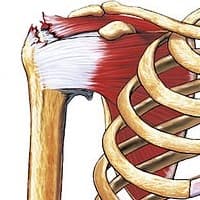
Most people who come in with right shoulder pain have already done a reasonable amount of investigating. They've had it looked at by their primary care doctor, maybe tried physical therapy, perhaps gotten an x-ray or MRI. The imaging is often "unremarkable." The physical therapy helps somewhat but the pain keeps coming back. The shoulder just doesn't feel quite right.
What very few of them have been told is that the liver and gallbladder can refer pain directly to the right shoulder — and that this pattern is well-documented in medical literature, not obscure alternative theory.
Visceral Referred Pain: When Organs Send Pain to the Wrong Zip Code
The phenomenon of referred pain — where an organ creates pain that is felt at a location distant from the organ itself — is one of the most consistent and clinically useful patterns in medicine. The classic example most people know is the heart attack that causes left arm pain. But the same neurological mechanism produces dozens of other referral patterns throughout the body.
Referred pain happens because the autonomic nerve fibers carrying signals from an organ share spinal pathways with the somatic nerves supplying nearby muscles and skin. The brain, when it receives distress signals through these shared pathways, sometimes "misidentifies" the source of the pain as coming from the musculoskeletal structure rather than the organ.
The liver and gallbladder refer pain through two primary mechanisms.
The T6-T9 Connection
The liver and gallbladder receive their autonomic nerve supply through the splanchnic nerves, which originate at T6 through T9 on the right side of the thoracic spine. When the liver or gallbladder is stressed — whether from congestion, sluggish bile flow, inflammation, or chronic dietary load — it sends distress signals back to the spinal cord at T6-T9.
Those signals create the viscero-somatic reflex: chronic tension and subluxation in the right mid-thoracic spine. Patients feel this as tightness and pain in the right mid-back, often worse after meals or in the morning. They also develop right-sided thoracic restriction that affects scapular mechanics and shoulder function — contributing to what appears to be a shoulder problem but is actually driven from deeper.
The Right Phrenic Nerve Referral: The Shoulder Connection
The second mechanism is more direct. The diaphragm — the large dome-shaped muscle of breathing — sits directly above the liver and gallbladder. The right lobe of the liver actually pushes up into the right dome of the diaphragm. When the liver is enlarged, inflamed, or congested, it creates pressure and irritation against the diaphragm.
The diaphragm is innervated by the phrenic nerve, which originates from cervical nerve roots C3, C4, and C5. These are the same nerve roots that supply the skin and muscles of the right shoulder and neck region (dermatome C4 and C5 overlap with the shoulder).
When the right dome of the diaphragm is irritated — by liver or gallbladder stress — the phrenic nerve carries that signal back to the spinal cord, where it gets interpreted as pain in the right shoulder region. This is a direct, anatomically described referral pathway. It's the same mechanism that causes right shoulder pain during a gallbladder attack.
The difference between an acute gallbladder attack and the chronic, low-grade version is that most patients never make the connection. Their gallbladder has been under chronic stress for years, their right shoulder has been "tight" for years, and neither their primary care physician nor their physical therapist has connected the two.
Chapman's Liver and Gallbladder Reflex Points
DeJarnette's CMRT system includes specific anterior and posterior reflex points for both the liver and the gallbladder — Chapman's reflex points that become tender and show palpable tissue texture changes when these organs are under neurological stress.
Liver reflex points: The anterior liver Chapman's points are found along the right 5th and 6th intercostal spaces on the anterior chest. The posterior points correspond to the right T6-T9 paraspinal region. Both sets become tender when liver function is compromised.
Gallbladder reflex points: The anterior gallbladder Chapman's point is located near the junction of the 6th rib and costal cartilage on the right. The posterior point corresponds to the T6 level. Gallbladder reflex points are often exquisitely tender and produce a distinctive "sick" sensation when compressed — quite different from ordinary musculoskeletal tenderness.
The CMRT Protocol for Liver and Gallbladder
When I identify an active liver or gallbladder reflex pattern in a patient with right shoulder pain, the treatment addresses both the visceral and spinal components:
The anterior Chapman's reflex points are worked with specific soft tissue contacts — small, rotary movements that release the tissue congestion at the reflex point. This stimulates lymphatic drainage to the corresponding organ and helps break the viscero-somatic loop. The T6-T9 right thoracic subluxations are adjusted. The posterior Chapman's points are assessed and treated. The right diaphragmatic attachments may also be addressed if diaphragmatic restriction is present.
Patients often notice during the session that the tenderness at the anterior reflex points diminishes significantly — a real-time indicator that the reflex has cleared. And right shoulder tension, in many cases, begins to ease within the same visit.
Lifestyle Factors That Compound the Problem
The liver and gallbladder bear the brunt of the modern diet. Processed foods, high intake of refined fats, alcohol, environmental toxins, medications — all of these increase the metabolic load on the liver. For San Antonio patients eating a diet heavy in fried foods, refined carbohydrates, and frequent alcohol, the liver and gallbladder are often the most overworked organs in the body, whether or not there's any formal diagnosis.
Gallstones, fatty liver disease (now called MASLD), and chronic cholestasis are extremely common — and they all generate the viscero-somatic pattern that refers to the right shoulder and mid-thoracic spine.
Dietary support — reducing inflammatory foods, increasing choleretic foods like beets, artichoke, and dandelion, staying well hydrated — supports the CMRT work significantly. We often recommend simple dietary adjustments alongside chiropractic care for patients with active liver or gallbladder reflex patterns.
When to Refer: Signs That Require Medical Evaluation
CMRT for liver and gallbladder dysfunction is appropriate for chronic, functional patterns — the kind that don't show up dramatically on imaging but produce real symptoms. There are signs, however, that require medical evaluation before or instead of CMRT:
- Acute right upper quadrant pain, especially with fever
- Jaundice (yellowing of skin or eyes)
- Dark urine combined with pale stools
- Known gallstones with increasing frequency of attacks
- Significant liver enzyme elevation on blood work
- Rapid weight loss
In these cases, I refer to the appropriate medical provider and may coordinate care once the acute issue is resolved.
Key Takeaways
- The liver and gallbladder refer pain to the right shoulder through two mechanisms: T6-T9 viscero-somatic referral and right phrenic nerve diaphragm irritation
- This is a well-described anatomical pathway, not an alternative medicine concept
- Chapman's reflex points for the liver and gallbladder become tender and palpably different when these organs are under stress
- CMRT addresses both the anterior/posterior Chapman's reflex points and the T6-T9 thoracic subluxations
- Right shoulder pain that doesn't respond to standard orthopedic or physical therapy approaches deserves a visceral evaluation
- Dietary factors significantly influence liver/gallbladder stress and should be addressed alongside chiropractic care
- Acute or severe liver/gallbladder symptoms require medical evaluation first
If you have chronic right shoulder pain that hasn't responded to standard treatment, a visceral evaluation may reveal what's been missing. Call Pura Vida Chiropractic at (210) 685-1994. We're at 2318 NW Military Hwy #103, San Antonio, TX 78231, serving San Antonio with bilingual care.